Statistical Learning Across Biomedicine

SLAB

The foundation, the floor, the framework.

전북대학교 통계학과 · Department of Statistics · Jeonbuk National University

Scroll

"We don't just remove variability.
We model it."

Most people think statistics is about computing averages. It's not.

Data varies. Always. The real question is: what model best explains that variability? A mean tells you where the center is — but a good statistical model tells you how and why observations differ, across brains, across images, across populations, and with what uncertainty.

That's the question driving everything we do.

Foundation
Statistical Methodology
Floor
Biomedical Imaging & Clinical AI
Framework
Population Health & Epidemiology
Foundation

01 — Statistical Methodology

Building methods
from the ground up.

We develop novel statistical methods for complex, real-world data. Generalized fiducial inference offers a new framework for uncertainty quantification. Dynamic network clustering captures how connections evolve over time — in social, biological, and brain networks.

Methods are not just tools. They are the structure that makes scientific inference possible.

Fiducial Inference Uncertainty Quantification Dynamic Networks Brain Connectivity R / Python Packages

Students will learn

  • Statistical method development end-to-end
  • Network analysis & graph theory
  • R/Python package development
  • Simulation study design
Floor

02 — Biomedical Imaging & Clinical AI

Medical imaging
meets statistical rigor.

We develop and evaluate statistical and AI-based methods for medical image analysis — spanning CT, MRI, fMRI, and DTI. From pulmonary CT modeling to neuroimaging pipelines, we ensure that clinical AI systems are validated with the rigor they deserve.

If the model says something, we ask: can we trust it?

CT / MRI / fMRI / DTI Neuroimaging GLMM · GEE DL Reproducibility Survival Analysis

Students will learn

  • Medical image data preprocessing & analysis
  • GLMM, GEE, Cox PH, competing risks
  • DL model evaluation & reproducibility
  • Neuroimaging analysis pipelines
Framework

03 — Population Health & Epidemiology

Data that connects
diet to disease.

Using large-scale population surveys including KNHANES, we investigate how dietary patterns — including Korean traditional foods — relate to chronic disease outcomes. Complex survey design requires careful statistical handling, and we specialize in getting it right.

From nutritional epidemiology to chronic disease risk, we connect individual-level data to population-level inference.

KNHANES Complex Survey Design Nutritional Epidemiology K-Food GLM · Logistic

Students will learn

  • Complex survey data analysis
  • Large-scale public data (KNHANES, 건보)
  • Epidemiological study design
  • Logistic / Poisson regression, GLM

Our Team

PI
Members
Alumni
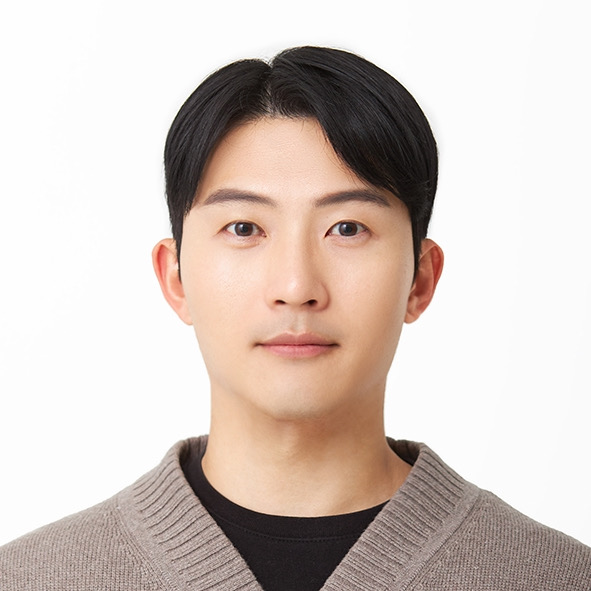
황승용

황승용 (Seungyong Hwang)

Assistant Professor · Department of Statistics, Jeonbuk National University

Experience

Senior Biostatistician GRAIL, Inc., Menlo Park, CA
2022 — 2024
Postdoctoral Fellow, Department of Genetics Stanford University, Stanford, CA
2020 — 2022

Education

Ph.D. in Biostatistics University of California, Davis Advisors: Prof. Thomas C.M. Lee & Prof. Jie Peng
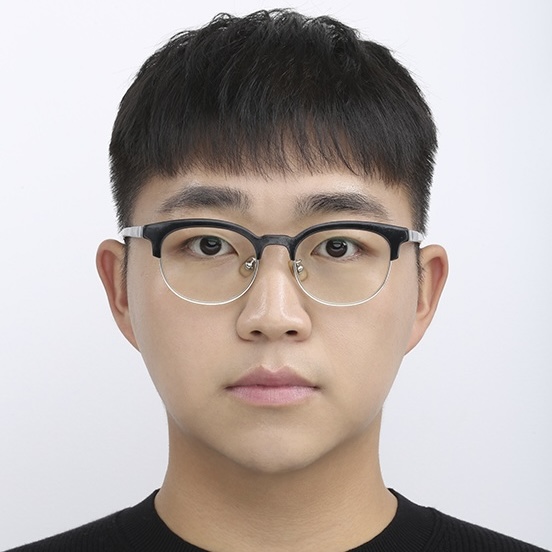
김남윤(Namyoon Kim)
김남윤(Namyoon Kim)
Undergraduate student
Machine Learning for Healthcare
홍성지(Seongji Hong)
홍성지(Seongji Hong)
Master student
N/A
·

Research Output

Published
Under Review
In Preparation
SCIE Co-Author
Gochujang attenuates colorectal cancer by promoting colonic SCFA utilization and GPCR expression despite limited recovery of microbial diversity
Baek J, Kim J, Jeong D, Hwang S, Donohoe D, Han A
SCIE Co-Author
CNNeoPP: a large language model-enhanced deep learning pipeline for personalized neoantigen prediction and liquid biopsy applications
Cai Y, Chen R, Song M, Wang L, Huo Z, Yang D, Zhang S, Gao S, Hwang S, Bai L, Lv Y, Cui Y, Zhang X
SCIE Co-Author
Contextualized biomedical language processing enhances ICU survival prediction
Chen R, Cai Y, Zhang S, Huo Z, Song M, Li W, Yang D, Hwang S, Bai L, Han F, Zhang X
SCIE First Author
Estimating fiber orientation distribution with application to study brain lateralization using HCP D-MRI data
Hwang S, Lee T, Paul D, Peng J
SCIE Co-First Author
Diagnostic Accuracy of Magnetic Resonance Imaging Features and Tumor-to-Nipple Distance for Nipple-Areolar Complex Involvement: A Systematic Review and Meta-Analysis
Byon J, Hwang S, Choi E, Choi H
SCIE First Author
Generalized Fiducial Inference for Threshold Estimation in Dose-Response and Regression Settings
Hwang S, Lai C, Lee T
SCIE Co-Author
Simultaneous detection of multiple change points and community structures in time series of networks
Cheung RCY, Aue A, Hwang S, Lee T
First Author Under Review
Estimating Spatially-Smoothed Fiber Orientation Distribution from Diffusion-MRI Experiments
Hwang S et al.
First Author Under Review
Hierarchical Clustering in time-evolving dynamic networks
Hwang S et al.
First Author Under Review
A Weighted Approach for Single Cutoff Selection in Survival Analysis
Hwang S et al.
First Author Under Review
Rethinking Statistics Education in the Age of Generative AI: The DRIP Framework
Hwang S et al.

Latest from S-LAB

2026 · 05
Invited Talk at 한국데이터정보과학회
Presented D-MRI processing and brain lateralization research.

Courses

STAT · Undergraduate
통계적 사고와 사회 (Statistical Thinking and Society)
An introduction to statistical thinking for non-majors. Learn how data shapes decisions in everyday life.
STAT · Undergraduate
R 프로그래밍 (R Programming)
Introduction to statistical computing using R - datan manipulation, visualization and statistical analysis
STAT · Undergraduate
생명과학자료분석 (Statistical Analysis for Life Science)
Statistical methods for life sciences, clinical trial design, and SAS-based analysis.
STAT · Undergraduate
응용통계학 (Applied Statistics)
Generalized linear models including logistic regression, Poisson regression, and model diagnostics using R.
STAT · Graduate
생물통계학 (Advanced Biostatistics)
Graduate-level biostatistics. Emphasizes application to real biomedical data.

Join Us

We welcome students and researchers with curiosity about statistical methodology and its applications. If any of our research areas interest you, feel free to reach out.

MS / PhD Students
Strong interest in statistics or biomedical research. R or Python experience is a plus.
Undergraduate Research Assistants
JBNU undergraduates looking to gain hands-on research experience.
Collaborators
Clinicians, epidemiologists, or researchers with data and statistical questions.
Get in touch →

Code & Data

Open-source software and resources from our lab.